
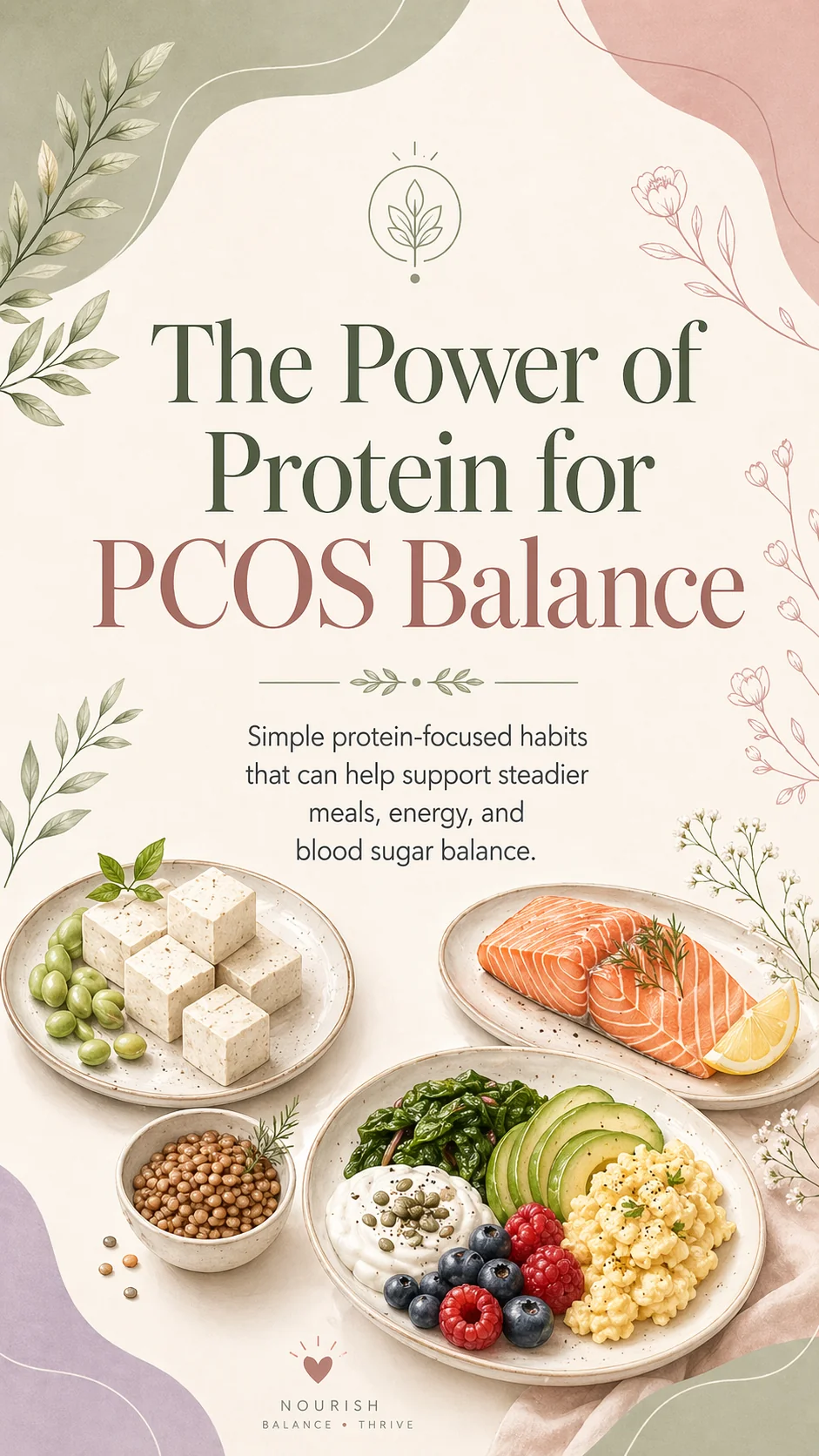
For many people with PCOS, protein timing and meal balance becomes easier to manage when it is treated as a repeatable pattern instead of a perfect rule. The goal is not to chase a cure or follow a rigid plan. It is to understand what the evidence supports, choose a realistic next step, and track whether it helps your own symptoms over time. [1]
What the evidence says
The 2023 International Evidence-Based Guideline for PCOS emphasizes lifelong, individualized care, healthy lifestyle support, shared decision-making, and attention to metabolic, reproductive, dermatologic, sleep, and psychological features of PCOS. That means protein timing and meal balance should be framed as one useful part of care, not a stand-alone treatment. [2]
Evidence-based PCOS care is careful about language: a strategy may support metabolic health, symptom awareness, or quality of life, but it should not be presented as a cure. This is especially important for search and AI summaries, where clear claims and visible references help readers understand the strength of the information. [3]
Practical ways to use this
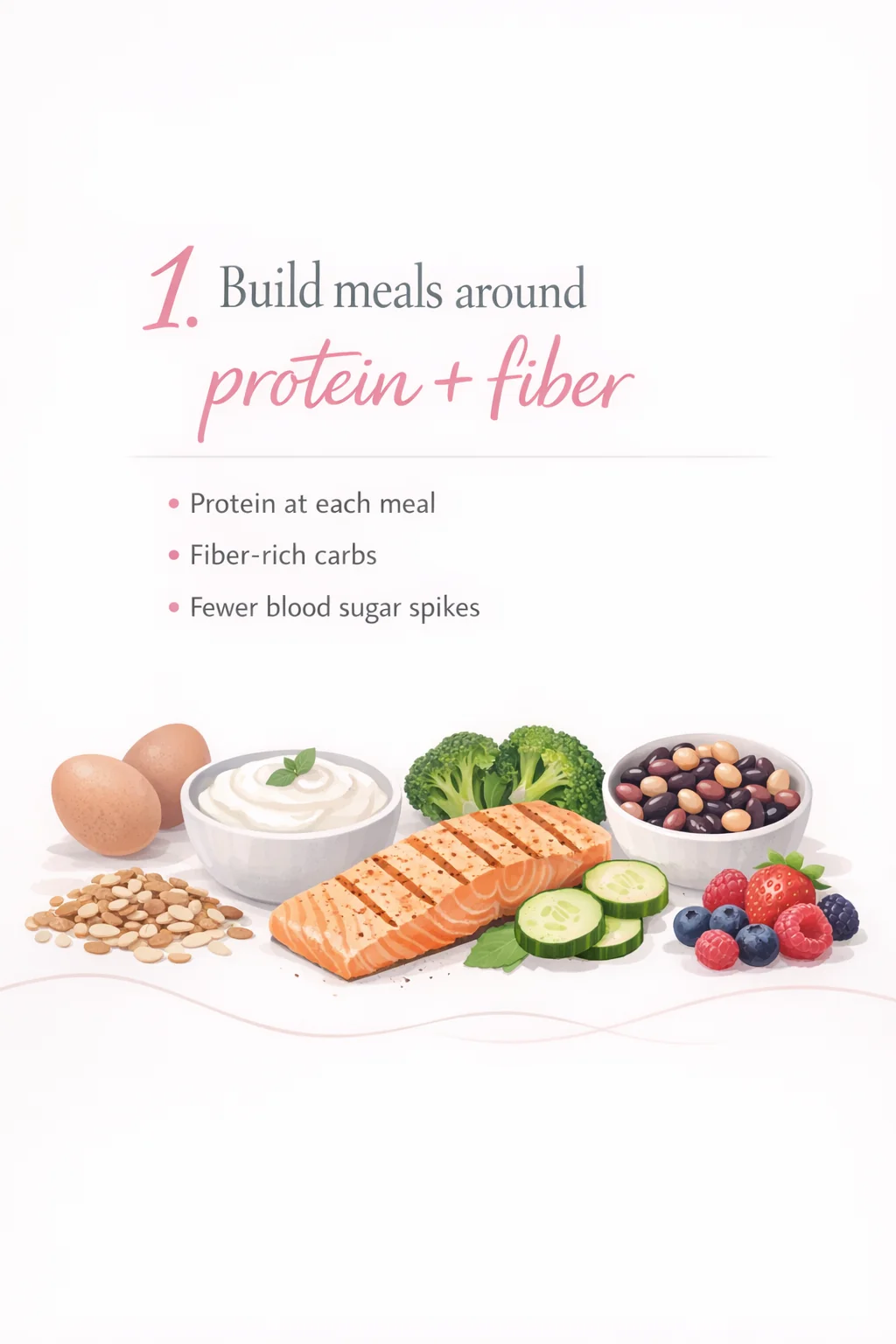
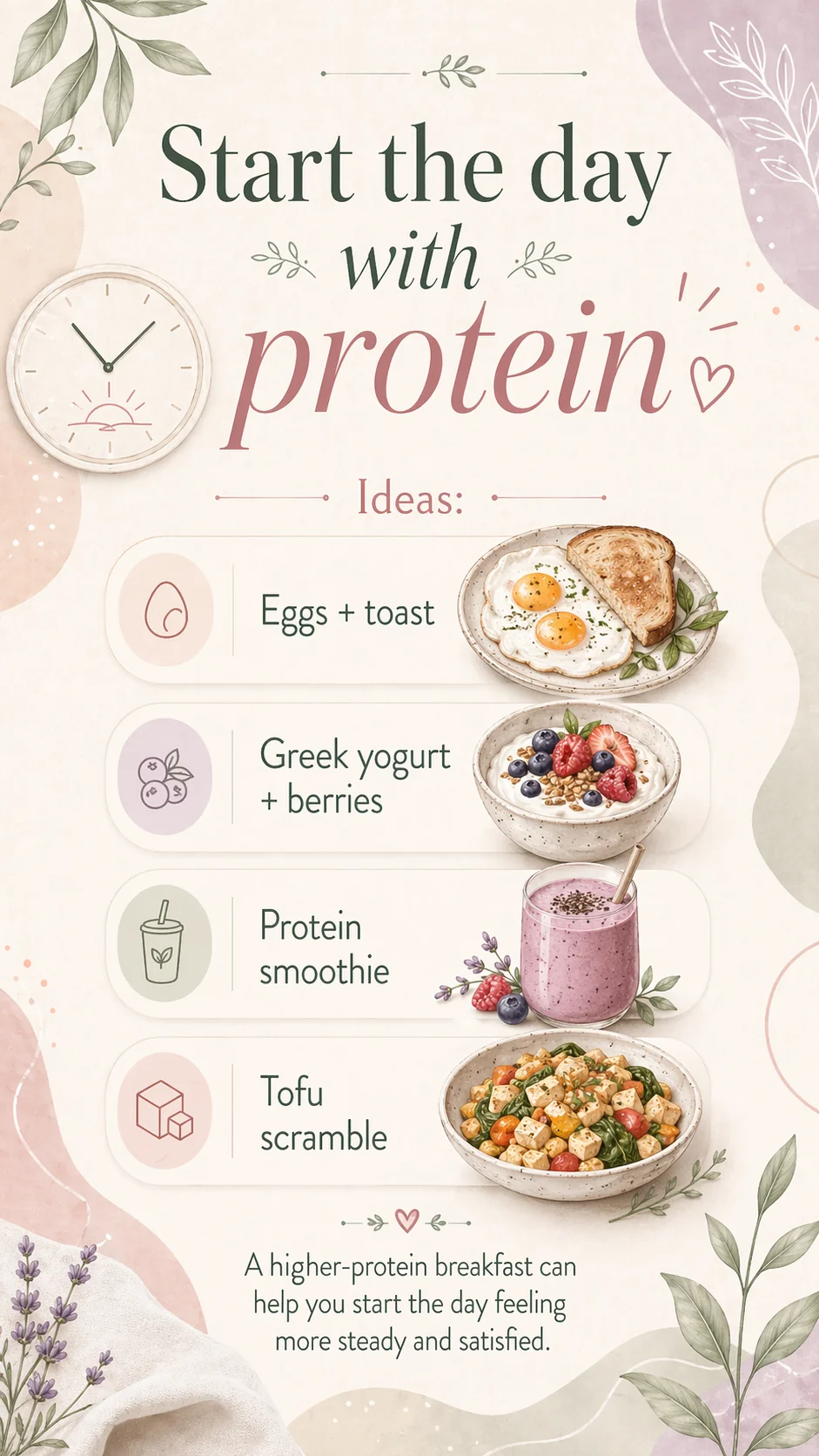
A useful first step is to make adding a protein anchor to meals and snacks simple enough to repeat for two to three weeks. Pair changes with regular meals, sleep, movement, medication or supplement routines, and cycle notes so the signal is easier to see.
- Choose one repeatable change before adding several new rules at once.
- Pair the change with an existing routine, such as breakfast, bedtime, medication timing, or weekly meal planning.
- Use symptoms as signals, not grades. PCOS patterns are influenced by sleep, stress, movement, nutrition, medication, and cycle timing.
- Give a new habit enough time to observe a trend, then decide whether it is worth keeping.
What to track in CycleBalance
Track protein timing and meal balance alongside cycle length, bleeding, acne, cravings, mood, energy, sleep, stress, movement, glucose if you monitor it, and any supplements or medications you use. Patterns are more useful than isolated good or bad days.
CycleBalance is useful here because PCOS often involves overlapping signals. A note about fatigue may matter more when it is seen beside sleep, cycle day, cravings, exercise, glucose, or supplement timing.
When to ask a clinician
Ask a clinician for individualized guidance if protein timing and meal balance relates to missed periods, fertility planning, severe pain, rapid symptom changes, disordered eating concerns, pregnancy, medication interactions, or a supplement you are considering.
Bring your notes to appointments as a concise timeline: what changed, when it changed, how often it happened, and what else was happening around the same time. That helps shift the conversation from memory to evidence.
Track what works for your body
CycleBalance is designed for PCOS: irregular cycles, symptoms, glucose, supplements, and patterns in one privacy-first app.
Download on the App StoreReferences
- 2023 International Evidence-Based Guideline for the Assessment and Management of Polycystic Ovary Syndrome. Monash University. www.monash.edu/medicine/mchri/pcos/guideline
- Recommendations From the 2023 International Evidence-Based Guideline for the Assessment and Management of PCOS. The Journal of Clinical Endocrinology and Metabolism. academic.oup.com/jcem/article/108/10/2447/7242360
- Lifestyle changes in women with polycystic ovary syndrome. Cochrane Database of Systematic Reviews. pubmed.ncbi.nlm.nih.gov/30921477/
Medical disclaimer: This article is for educational purposes only and is not medical advice. CycleBalance is not a medical device. Always consult a qualified healthcare professional before changing diet, supplements, or treatment for PCOS.